
Why Asking the Right Questions Matters
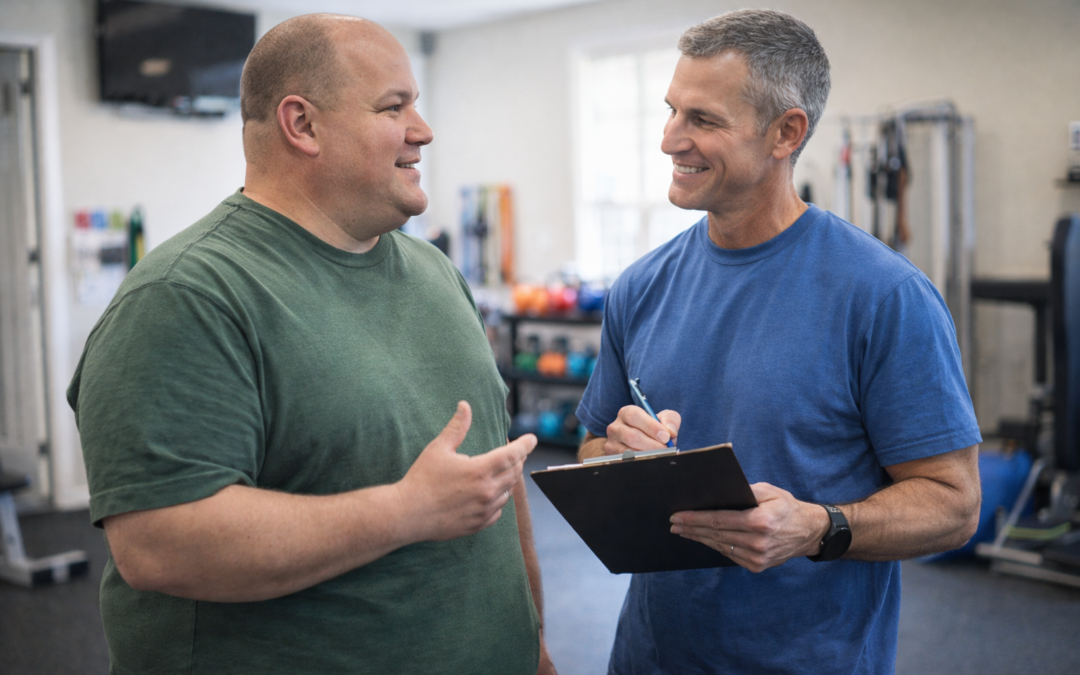
Choosing a personal trainer is not just about finding someone who can lead a workout. It is about finding someone who understands your goals, your health history, and how to guide you safely toward progress.
Many people begin working with a trainer after dealing with injuries, finishing physical therapy, or feeling unsure about where to start. Asking the right questions helps you determine whether a trainer has the experience and approach needed to support your situation.
Research consistently shows that well-structured, supervised resistance training programs lead to better outcomes than unsupervised exercise. For example, a study examining supervised strength training found that participants achieved significantly greater improvements in strength when training under professional supervision compared to training alone.
Because the trainer you choose plays a major role in your progress, it is worth taking a few minutes to ask thoughtful questions before you begin.
1. How Do You Personalize Training Programs?
No two clients should be doing the exact same program. Your training plan should reflect your goals, movement ability, and health history.
A good trainer will typically begin with some form of movement assessment. This helps identify areas of weakness, stiffness, or imbalance that could affect performance or safety.
Personalization is important because exercise programs that match an individual’s ability and needs are far more likely to produce consistent progress.
2. How Do You Track Progress?
Progress is not just about the number on a scale. Strength improvements, better mobility, improved balance, and greater energy levels are all meaningful indicators of progress.
Ask how your trainer tracks these changes. Some trainers measure strength gains, track mobility improvements, or evaluate movement quality over time.
Tracking progress helps ensure that your program continues to challenge you appropriately while avoiding unnecessary setbacks.
3. How Do You Adjust Programs When Challenges Come Up?
Life is unpredictable. Work schedules change, injuries happen, and stress levels fluctuate.
A good personal trainer understands that progress rarely follows a perfect straight line. They should be able to adjust your program based on how your body responds to training.
Research in strength training shows that progressive overload and proper program adjustments are key to long-term strength development and injury prevention.
This adaptability helps keep your program effective without pushing you beyond what your body is ready for.
4. How Do You Support Clients Outside of Training Sessions?
The time you spend exercising is only one piece of the overall health picture. Sleep, nutrition, recovery, and daily habits all influence your results.
Many trainers provide guidance around lifestyle habits, mobility work, or nutrition strategies that complement your training program. This support helps ensure the progress you make in the gym carries over into everyday life.
5. What Certifications or Education Do You Have?
A qualified personal trainer should have recognized certifications and a clear understanding of exercise science, movement mechanics, and program design.
Look for trainers who hold certifications from reputable organizations such as:
- National Strength and Conditioning Association (NSCA)
- American Council on Exercise (ACE)
- National Academy of Sports Medicine (NASM)
- Certified Functional Strength Coach (CFSC)
These certifications require trainers to understand anatomy, injury prevention, and safe programming methods.
The goal is not just credentials on paper. The goal is confidence that your trainer understands how the body moves and how to progress training safely.
A Practical First Step
Finding the right personal trainer is not about perfection. It is about partnership.
When a trainer understands your goals, communicates clearly, and provides thoughtful guidance, exercise becomes less confusing and more productive.
If you are exploring personal training in Aiken and want to learn what a structured, personalized approach looks like, call to schedule your complimentary consultation and start the conversation.
