
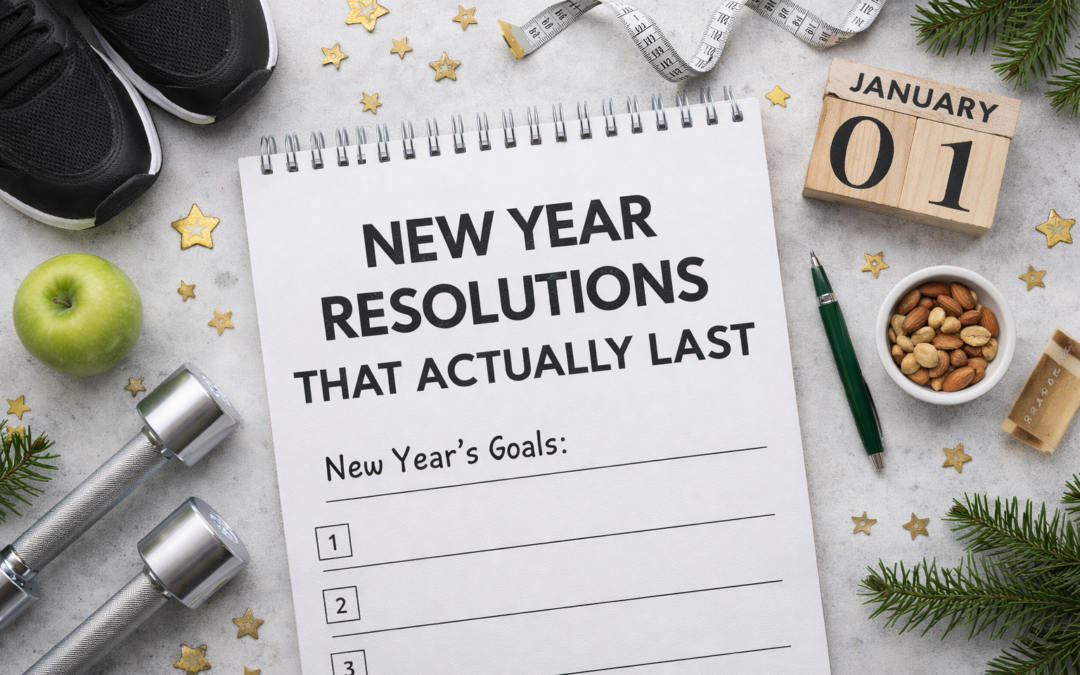
Why New Year Resolutions So Often Fail
Every January, people feel motivated to make changes. Gym memberships spike, grocery carts fill with healthy intentions, and schedules are packed with plans to “do better.” Yet research consistently shows that most New Year resolutions are abandoned within the first few months.
A study published in PLOS ONE found that while motivation is often high at the start of the year, success depends far more on how goals are structured than on willpower alone. Participants who focused on specific behaviors and flexible habits were significantly more likely to maintain their resolutions than those who relied on vague goals like “get in shape” or “eat better”
The issue is not effort. It is approach.
Motivation Is Temporary. Habits Are Not.
Motivation is helpful, but it is unreliable. It fluctuates with stress, schedules, sleep, and energy levels. Habits, on the other hand, reduce the need for constant decision-making.
Research from The British Journal of General Practice and articles from newstoday shows that habit formation relies on repetition and consistency, not intensity. Small behaviors repeated regularly were more likely to become automatic over time, while overly ambitious goals led to burnout and drop-off.
This explains why extreme resolutions often fail. They ask too much, too fast, with no room for real life.
What Successful Resolutions Have in Common
People who stick with their New Year goals tend to focus on behaviors they can repeat, not outcomes they cannot fully control. Instead of aiming for dramatic change, they build structure.
A review in Behavior Research and Therapy found that goals tied to specific actions, such as scheduled workouts or planned meals, were more effective than outcome-based goals like weight loss alone.
Successful resolutions are also flexible. They allow for setbacks without turning one missed workout or off-plan meal into a reason to quit entirely.
How to Set Resolutions That Work in Real Life
A more effective way to approach New Year resolutions is to think in terms of systems instead of outcomes.
Start small. Choose one or two behaviors that fit naturally into your current routine. That might be planning lunches for the workweek, strength training twice per week, or adding a short daily walk.
Build structure. Schedule your habits the same way you schedule appointments. Research from Health Psychology shows that planned behaviors are significantly more likely to occur than those left to intention alone.
Expect imperfection. Progress is not linear. The ability to adjust instead of quit is one of the strongest predictors of long-term success.
The Bigger Picture
New Year resolutions should not feel like punishment or pressure. They are simply a chance to reset, reflect, and choose habits that support your health and quality of life.
When goals are realistic, supported by structure, and adjusted as life changes, they stop feeling like resolutions and start feeling like routines. That is when progress becomes sustainable.
A Practical First Step
If you want help turning New Year motivation into a plan that fits your life, start with a simple conversation. Call to schedule your complimentary consultation and explore strategies that support consistency, not perfection.
