
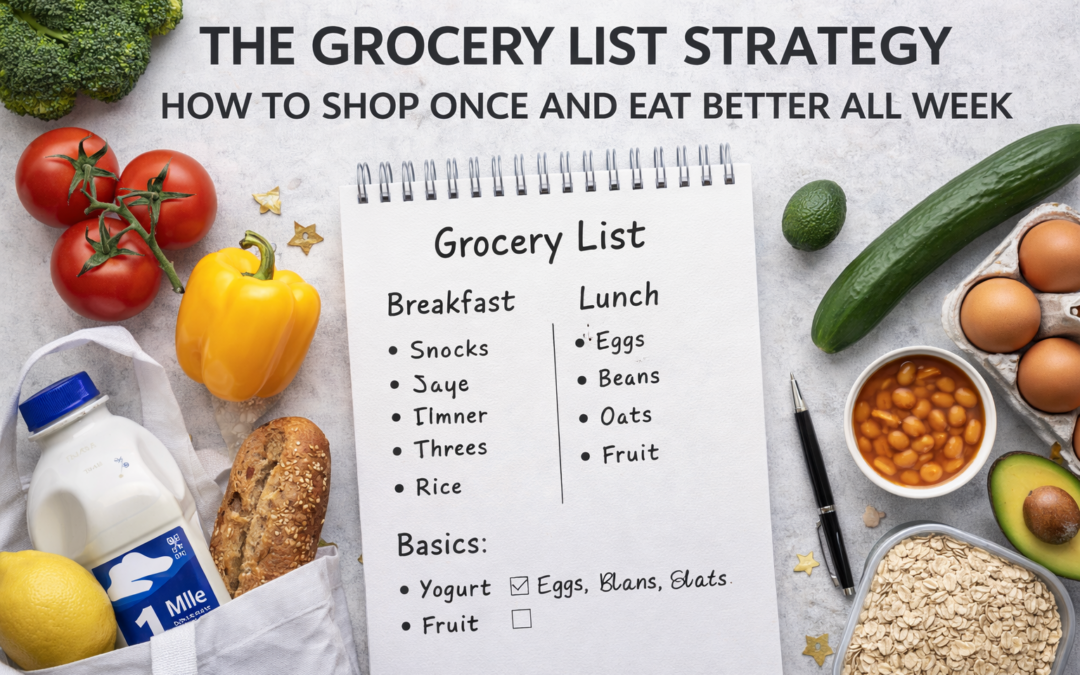
Why a Grocery List Works Better Than Willpower
If you have ever walked into a store with “good intentions” and walked out with random items that do not make meals, you are not alone. The grocery store is full of decisions, and decisions take energy. When that mental energy runs low, it gets easier to grab what is quick, familiar, or tempting.
Recent nutrition research has explored this idea through decision fatigue, which can make frequent choices harder and lead to more impulsive decisions. A 2025 narrative review in Nutrients describes how decision fatigue can affect food choices, especially when people are tired, stressed, or making many decisions in a row.
A grocery list solves this problem in a practical way. It reduces the number of decisions you have to make in the moment.
Meal Planning Starts With a Simple Plan, Not a Perfect Plan
Meal planning does not have to mean cooking every meal from scratch or eating the same thing every day. It can be as simple as planning a few dinners, planning lunches that repeat, and keeping a short list of staples on hand.
One large open-access study in the International Journal of Behavioral Nutrition and Physical Activity found that meal planning was associated with better diet quality, more food variety, and healthier weight status. The point is not that planning is magical. The point is that planning makes it easier to follow through.
The Grocery List Strategy
Here is the core idea. You build your grocery list around meals, not around random ingredients.
Start by writing down:
1) Your anchors for the week
Pick 2 to 3 breakfast options and 2 lunch options you can repeat. Repeating does not mean boring. It means reliable. When your weekday schedule gets busy, you already know what you are doing.
2) Your dinners
Choose 3 to 4 dinners that share ingredients. This keeps the list shorter and lowers waste. For example, if you buy bell peppers, onions, and a protein, those can become tacos, a stir-fry, and a sheet pan meal.
3) Your basics
These are your staples that make meals easier: yogurt, eggs, frozen vegetables, canned beans, rice, oats, fruit, and a few sauces or seasonings you actually use.
Why Shopping With a List Helps You Eat Better
A grocery list is not just a productivity trick. It can change what ends up in your cart.
A study published in Journal of the Academy of Nutrition and Dietetics found that using a grocery list was associated with healthier diets and lower BMI in the population studied. A list helps you remember what you need, avoid impulse buys, and build meals that are actually complete.
How to Make This Work in Aiken Without Overcomplicating It
Aiken has plenty of good grocery options. The key is to keep your system simple so it works whether you shop at Publix, Kroger, Food Lion, or even make a quick trip to Walmart for staples.
Try this approach:
- Shop once for the week’s main meals.
- Plan one flexible meal for leftovers or an easy night.
- Keep two emergency meals on hand, like eggs and toast, a quick salad kit with protein, or a freezer option that is not ultra-processed.
If you do this consistently, meal planning starts to feel less like a project and more like a routine.
A Practical First Step
If you want to try this strategy, start with one small win. Plan just three dinners, write a list based on those meals, and shop once. Then repeat next week with small adjustments.
If you would like help building a meal planning system that fits your schedule and preferences, Bill Cunningham offers complimentary nutrition consultations as part of our membership packages. You can call to speak with our nutritionist, Vanessa, and talk through a simple, realistic plan you can stick with.
