
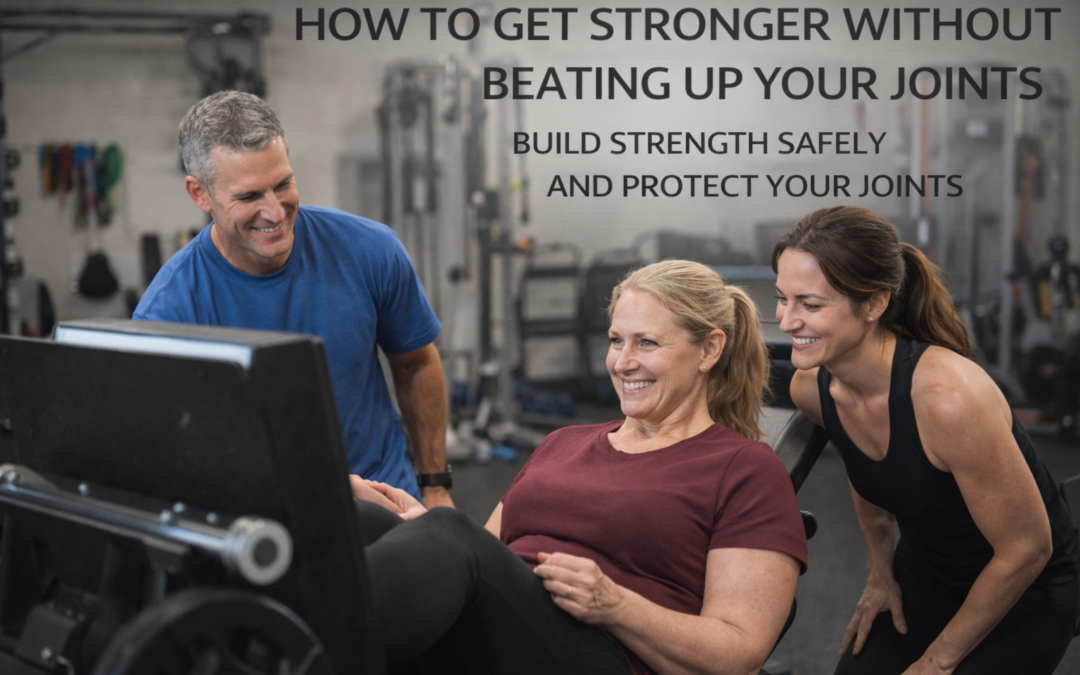
Strength Should Help Your Body, Not Hurt It
Many people want to get stronger but worry about joint pain, stiffness, or previous injuries. It is a common concern, especially for individuals returning to exercise after time away or after finishing physical therapy.
The good news is that properly designed strength training actually helps protect the joints rather than damage them. Stronger muscles support the joints, improve movement control, and reduce stress placed on connective tissues.
Focus on Movement Quality First
One of the biggest mistakes people make is focusing only on how much weight they can lift. Strength starts with learning how to move well.
Before adding heavier resistance, it is important to develop proper movement patterns. Exercises like squats, hinges, pushes, and pulls should feel controlled and stable. When the body moves efficiently, the joints experience less unnecessary stress.
Improving movement quality also helps reduce the risk of injury. A comprehensive review examining the role of muscular strength in performance and injury prevention highlights how stronger muscles improve coordination, stability, and force control during movement.
Strength is not just about muscles. It is about how your entire body works together.
Progress Gradually
Another key to joint-friendly strength training is gradual progression. The body adapts best when the workload increases slowly over time.
Jumping into high intensity workouts too quickly can overwhelm joints and connective tissues that are not yet prepared for the load. Gradual increases in resistance allow muscles, tendons, and ligaments to adapt safely.
This process is often called progressive overload. It simply means applying slightly more challenge over time so the body continues to grow stronger.
When this progression is planned carefully, the body adapts in a positive way rather than reacting with pain or inflammation.
Strengthen the Muscles That Support Your Joints
Healthy joints rely on strong supporting muscles. For example:
- Strong glutes and hamstrings help protect the knees and lower back
- Strong core muscles support the spine
- Strong shoulder muscles improve stability during lifting and daily movement
Targeted strengthening around these areas helps distribute forces more evenly through the body.
This type of balanced training helps people move more comfortably in everyday activities such as climbing stairs, lifting groceries, or working in the yard.
Recovery Is Part of the Process
Strength training places healthy stress on the body, but recovery is where adaptation actually happens.
Sleep, hydration, and nutrition all influence how well joints and muscles recover between workouts. Proper recovery allows the body to repair tissues and become stronger for the next training session.
Listening to your body also matters. Occasional soreness is normal when building strength, but persistent joint pain is a signal that adjustments may be needed.
A well-designed training program always includes room for recovery and adaptation.
A Practical First Step
Getting stronger does not require extreme workouts or punishing routines. In fact, the most effective programs are often the most consistent and sustainable.
If you are looking for a safe, structured approach to building strength while protecting your joints, a conversation with a qualified trainer can help clarify the right starting point.
If you would like guidance building strength in a safe and structured environment, call to schedule your complimentary consultation and explore whether personal training is a good fit for you.
